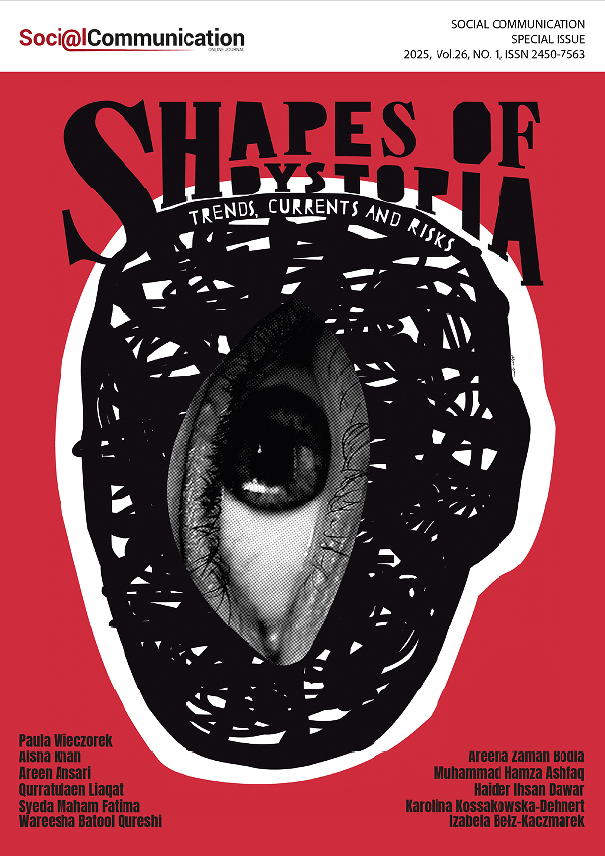
The Many Shapes of Dystopia: From Literary Tradition to Media and Digital Spectacle
DOI:
https://doi.org/10.57656/sc-2025-001Keywords:
dystopia, utopia, digital culture, surveillance, literary studiesAbstract
This paper explores the evolution of dystopia from its literary origins to its contemporary digital manifestations, arguing that the genre has transformed from a speculative inversion of utopian ideals into a critical method for interpreting modern reality. By combining literary history (from More, Swift, and Zamyatin to Atwood and Butler), media analysis (film and television), and cultural critique (digital
surveillance and algorithmic control), the study bridges traditionally distant fields and proposes a synthetic, interdisciplinary framework. Drawing on theorists such as Suvin, Moylan, Claeys, and Zuboff, it contends that dystopia has outgrown its status as a literary genre to become a cultural grammar for reading the world. Through comparative and theoretical analysis, the article demonstrates how dystopia functions as both narrative and methodology—mapping the interplay of power, technology, and identity in the digital age. The study shows that the mechanisms conceptualized in classic dystopias such as Nineteen Eighty-Four and The Handmaid’s Tale—surveillance, linguistic control, and biopolitics—now operate through social media, algorithms, and self-performance. Ultimately, dystopia’s many shapes reveal the humanities’ enduring capacity to interpret and critique our algorithmic, mediated existence.